Sunday, April 19, 2015

In a word, a slice of perspective (Mary Schmich)

In a word, a slice of perspective (Mary Schmich)

I recently read the column "In a word, a slice of perspective" for school, and am to put some of my thoughts up here for the world to see. So here they are.

Oh.

And here's a copy of the column:

(It's kind of long)


In a word, a slice of perspective


May 21, 2008|By Mary Schmich


Words sometimes land in your mind like birds on a wire. They flutter in, sit there, flutter off, come back, distract you at inconvenient hours.

That bird of a word for me lately is "portion."

I hear the word sometimes when I'm thinking about my friends and family, other times when I'm confronted by the news.


A cyclone hits Myanmar and the death count rises as inexorably as the sun. Bodies wash onto the riverbanks. Corpses rot in the mud.

What a small portion those human beings got.

Then an earthquake hits China and the death count rises as inexorably as the moon.

"What do I have left in the world?" asked a Chinese man quoted in a story by Evan Osnos, the Tribune's China correspondent. The man had lost his wife, his son, his home. "I have nothing," he said. "I have nothing."

Nothing but life itself. His portion, swiftly and terribly reduced, was still bigger than what was allotted to the dead.

Until I started inexplicably obsessing on the word, hearing it like a mantra, thinking, out of the blue on many days, "So this is my portion," I had never thought specifically about what "portion" meant.

I knew it meant 10 potato chips, seven Triscuits and never quite enough ice cream. I knew it meant a part of a whole, as in a rhubarb pie.

Until I Googled "portion," though, I didn't know it meant a dowry, the money a woman brings to her husband through marriage. I had never heard of Bible portions and Torah portions.

Most significantly, I didn't know "portion" means fortune, fate. I have recently learned that the Greek word "moira" signifies both fate and portion.

The word "portion," as it has been chirping in my brain, is some combination of its definitions: allotment and lot, quantity and destiny.

We learn as children that portions are limited and that people get different amounts of things.

"He got more!" is one of childhood's great laments.

"More" was my first word.

From the beginning of life, we chafe at the boundaries of enough. We grow up trying to correct the inequities of the servings we have been given.

If we fully grow up, we also try to correct the inequities of the servings given to others. We don't have to look as far as China and Myanmar to notice how unevenly life distributes its bounty.

A few days ago I was talking to a man involved in building a mixed-income community on the site of an old Chicago housing project.


"I used to think life should be fair," he said.

Now, after years of working with people who have a lot and those who don't, he has concluded that life simply isn't fair. You can do your best to reapportion the goodies, but there will always be people who get the granite countertops and the ones short on food.

Families are further proof that life portions out luck in random ways.

I think especially of my youngest sister, who is mentally disabled, who on an average day literally trembles with medicine and the fluctuations of a troubled mind. Her portion is so much smaller than mine that I want to rage against her unfair share as if it were my own. Her limited portion reminds me how capriciously big mine is. But the other day when I was musing on this notion to myself, she started talking about other mentally ill people she knows, ones abandoned by their families.

"Compared to them," she said, "I have a lot."

She does. So many of us do. There's always somebody with more, with a bigger slice of brains and beauty, a bigger scoop of fame and money, a heftier helping of love and time. But in this world of cyclones and earthquakes, a lot of us have potato chips to spare.


Kind of hits home doesn't it? Makes you think?
 
I think the author wants us to feel this way, she wants us to feel moved, but most of all she wants us to feel thankful. I think the author wrote this so when you read it you feel at peace with how the world just is. So many of us spend our time worrying about helping others who aren't as blessed as us. And although that isn't bad at all (in fact you should do more of it!), we need to accept the fact that we live in an imperfect world. She says,"life simply isn't fair". And everyone isn't the same as everyone else. And that is okay. So we just need to be thankful for what we do have.
 
I also think the author wants us to take something away from this. And a lot of it coincides with what I already said about being grateful. She wants us to read this and remember that we should be grateful and that "in this world of cyclones and earthquakes, a lot of us have potato chips to spare". So that the next time you are out and really really want something but can't afford it, you remember all you do have. And the next time you see someone who needs something more than you do, you remember all you already have and give it to them.
 
That's why this column was written, for this purpose. So that the next time you are out there in one of those situations, you remember this. And you act on it. Imagine, if 100 people read this article, felt convicted about how much they were helping, and then gave to 5 strangers in the next month, that's already 500 more people helped than usual. Multiply that by 10 - 5,000 people helped. The purpose of this column is big. It's so that we recognize in order to "fully grow up, we [need to] try to correct the inequities of the servings given to others".

The author expresses this purpose throughout the column with the writing techniques she uses. She uses anaphora by repeating things to connect with the reader (when she explains what she thought a portion was). She also uses short sentences or fragments when trying to draw attention to a point that she's making (at the end, "She does. So many of us do."). Lastly, she makes several references to events, and includes several proper nouns (Mayanmar, China, Triscuits, the Bible).

This column is relevant in our world today. It highlights some of the real world problems we hear about and we deal with. This column was written to point them out, to bring them to the light so that we can fix them and deal with them. And part of that dealing with them is accepting that it happened and life isn't fair. It's realizing "There's always somebody with more, with a bigger slice of brains and beauty, a bigger scoop of fame and money, a heftier helping of love and time." It's realizing that if we can, we should reach out to those others. The people in Haiti after their earthquake, the families who lost loved ones on a Malaysia flight, the citizens of Japan that lost everything during its tsunami, the starving children in Africa. This is why this column was written. To remind us of these people.


Monday, April 6, 2015

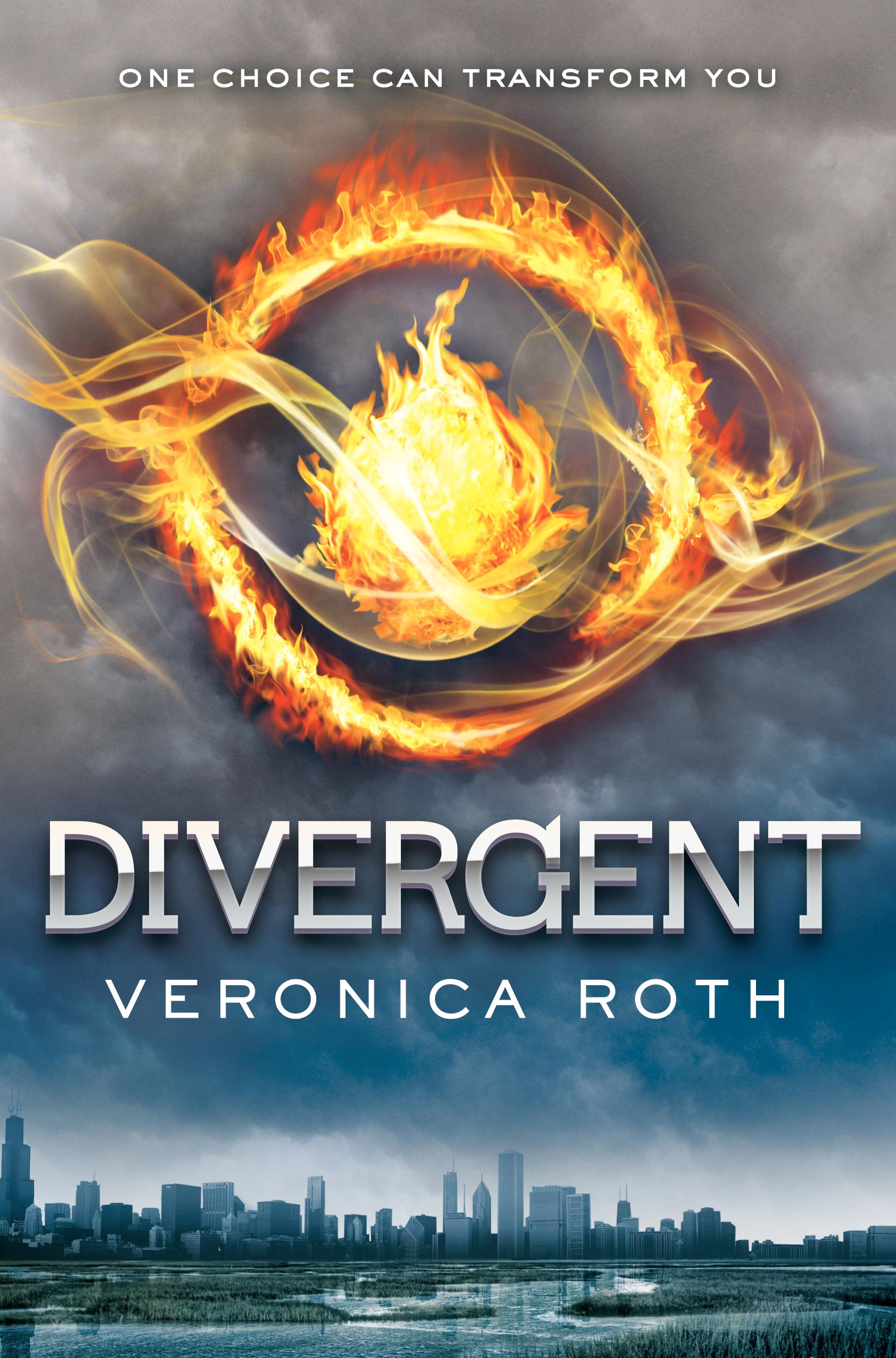
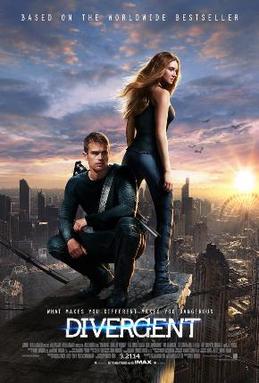
Divergent (Movie vs. Book)

Divergent (Movie vs. Book)


Okay, now I know some may find this unbelievable... BUT I only just saw the Divergent movie over Spring Break. I know, it came out like a year ago, the sequel is in theaters now, but that's besides the point. I want to share a few of my thoughts about this book and movie with the inter-web.

I read the book, Divergent a couple of months ago and thought it was ok. I don't want to spoil the ending just in case anyone was stronger than I was for a while and haven't read it yet. Which means I can't share my exact reasoning for why I wasn't a huge fan. To give you the general idea though, I felt as though the book included twists to the story that I felt were unnecessary. I didn't like it. I thought the writing was average, the same as any other dystopian book these days. However, I did love the whole idea of the world they lived in. I feel like the author had a brilliant idea and then took the story in the wrong direction.
 
 
Now, typically I would say that I liked the book better than the movie but in this case I actually didn't. There were some things that I appreciated in the book that weren't put into the movie, but generally, the movie was more enjoyable. I was less attached to the characters so I was able to appreciate the story instead of worrying about what was going to happen to them.

 
So these are the thoughts that I've just had floating around in my head recently and needed to get out. Kisses from Katie coming soon :)


Sunday, March 22, 2015

Books On My Mind

Books On My Mind

Hey all, hope you are having a wonderful Sunday! I have been thinking all weekend about what to blog about this week! I'm still reading Kisses from Katie but I don't have enough new stuff to talk about with that book so I'm just going to wait until I finish it. However, lately I keep adding to my mental list of books I want to read. Which is what this blog post is going to be. Everything that's been floating around in my mind lately. This way, I'll have an actual list, and the blog will (hopefully) keep me accountable to reading them. Okay, enough jib jab, here's the list.

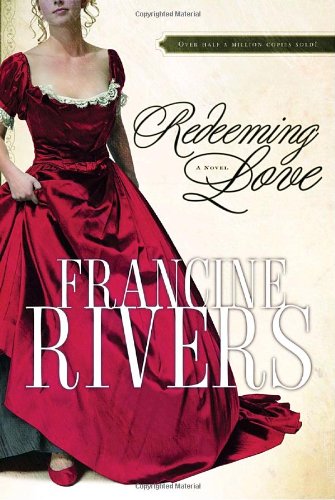
1. Redeeming Love by Francine Rivers


2. How to Catch a Prince by Rachel Hauck
 

3. One Thousand Gifts: A Dare to Live Fully Right Where You Are by Ann Voskamp


4. Take One by Karen Kingsbury (and the rest of the Baxter Family series)


5. Harry Potter and the Half-Blood Prince by J.K. Rowling (REALLY trying to finish these)


There are MANY more books that I am dying to read, but I figured that this list is a good start. Especially because some of them imply a couple or more other books. This just makes me soooo excited for spring break and summer so I can get readin!!! Anyway, that's all for now. Just really wanting this right now!!! (But I mean who doesn't)


Saturday, March 7, 2015

Princess Ever After

Princess Ever After

I am still working on Kisses From Katie, it needed to be returned to the Library, so I'll post a final post on that later. But, I did finish the second book in the Royal Wedding Series during all of the testing we had at school the past two weeks. It was also very good! I enjoyed the first one better than this one, the characters in the first book seemed more, I don't know, more ideal to me. Not saying you shouldn't read Princess Ever After. That book was also amazing. I would definitely recommend it. The whole plot is so entertaining and it leaves you thinking, what would I do?? Here, I'll give you the low-down.
 
Imagine you are in your late twenties and living in the same city here in America you've lived in your whole life. It's all you know. The only place you've ever lived and worked. It's where your friends and family are. Now let's say you just saved up enough money and worked to get to your dream job. You LOVE this job. It's what you live for since you're not married and don't have a family of your own. A couple of years ago your mom died, and then your great-grandma died. (Your grandma already died) So currently your life consists of you, your best friends, your dad and stepmom, and the dream job you LOVE. Okay, got all that? Now one Friday you're just living your life, the job you LOVE just breaking through, when some young man comes up to you and says you're in line for the throne in some European country. And he's not lying. The man says that if you come back with him you can restore the kingdom and either rule until you die, or rule until you abdicate the throne and leave the country in anarchy. Or if you don't come at the all the country becomes a part of another country and looses its independence. You ask how is this possible? He says your great-grandma was a princess there who had to flee during WWII. And if you come back... well you know. What would you do? You know going back is the right thing but you've never led anything in all your life, let alone a country. You would have to leave your job, at least for a while. You would have to leave everything you know.
 
Okay, wow, that was a mouthful. See what I mean!! I don't know what I would do!! And if you want to know what Regina does, you better read!!


Monday, February 23, 2015

Fahrenheit 451 - Dover Beach

Fahrenheit 451 - Dover Beach

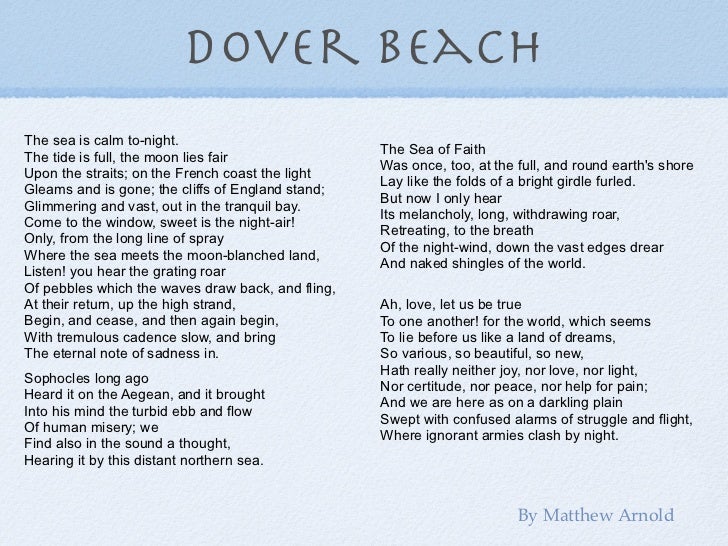
Here is my writing prompt for the poem Dover Beach:


     Mrs. Bowles ran out of the door and across the street to where she lived with her "husband" and "children". What is Mr. Montag thinking speaking to me like that? What right does he have to criticize my decisions? If he was in my place he would do the same exact thing. She slammed the door and ran into her home. She sat down in her own hard-backed chair and turned on 'family'. Oh how right it felt to be where she belonged. These people cared about Mrs. Bowles. Not her ever-absent husband, not her bratty children, not her insensitive friends and certainly not Mr. Montag.
    
     The phone rang next to Mrs. Bowles. She looked at the little screen to see who was calling. It was her husband. She ignored it. About five minute later he called again. Mrs. Bowles picked it up. "Hello." she said emotionless. "Well it's about time you picked up!" her husband barked, "I've been trying to call you from the office and you never pick up do you now?" Mr. Bowles swallowed, "I was visiting with Mrs. Montag." Mr. Bowles growled, "You know I don't like it when you go over there. That Mr. Montag is a strange one. Lately I've noticed him talking to a young girl along the street." Mrs. Bowles thought yet again about what Mr. Montag did today. She couldn't tell her husband. He would punish her for going over, punish her for not leaving sooner, and punish her because he was right and she was wrong. "Alright, I won't go over anymore," she answered.  "Good. Now look and see if I left any of my work papers on the table this morning." he commanded.

     Mrs. Bowles found the papers for her husband and hung up. He was right. He always was. And if he wasn't he found a way to make sure he was. She turned her attention back to 'family'. The husband on this show was always very kind to his wife. He was always right and she was always wrong but he never spoke harshly to her. For the longest time Mrs. Bowles always thought she and Mr. Bowles were like that. But, now she knew she was wrong. The husband on 'family' was so much better than Mr. Bowles. He loved his wife. Just like the man who wrote Dover Beach. That poem Mr. Montag read was cruel. Very cruel. But as much as Mrs. Bowles didn't want to admit it, it was honest. Families like they have on TV and in books don't exist.
    
     Mrs. Bowles felt a tear roll down her face. NO! What is this? Why am I crying? I haven't cried in years! But Mrs. Bowles knew why she was crying. She wanted a family like the one on TV. And she wanted a marriage like the one in Dover Beach. She just never knew any different until today.

Mrs. Bowles realized that her life wasn't like the one on 'family'. It was so much worse. Dover Beach taught her what love really is supposed to look like, it opened her eyes to the unreality of 'family' and the life she thought she had. It taught her that sometimes, even though something makes you cry, it's still good for you.

Monday, February 9, 2015

Fahrenheit 451

Fahrenheit 451

   So Fahrenheit 451 is actually the book we are reading in class right now but I had a few thoughts about it that I wanted to share. In case you don't know what it's about I provided a description from goodreads:

   Guy Montag is a fireman. His job is to burn books, which are forbidden, being the source of all discord and unhappiness. Even so, Montag is unhappy; there is discord in his marriage. Are books hidden in his house? The Mechanical Hound of the Fire Department, armed with a lethal hypodermic, escorted by helicopters, is ready to track down those dissidents who defy society to preserve and read books.

   Fahrenheit 451 was originally written in 1953, before tissues, color TV, and smart phones. This makes the futuristic sense of the book that much more appealing to me. I mean it's great hearing them talk about color TV and thinking, "Wow that actually happened!", but I find what they don't mention to make it more interesting than what they do. I think if the book was written today, with today's technology in mind, the whole premise of the book would be different. The whole plot line is books are bad because they went out of style and now people are dumb so we don't want anyone to be smarter than anyone else. As far as the author, Ray Bradbury, knew in 1953, that actually could've happened. It was unlikely, very unlikely, but still more possible than it is today.
  
   I feel as though today this future is near impossible. With all of our new inventions like smart phones and e-books, and even computers books have gone out of style some, but knowledge in general hasn't. People have become lazy when it comes to reading for information, but they are still getting that information. Google is the simplest reason why. Or even more so, Siri. Our society today is not giving up on reading for knowledge, we're getting around it.


  Throughout reading this book I've thought a lot about this. About how society is getting information, about how we strive for it, about how somewhere there are people in a lab everyday trying to advance our world. Reading may be going out some, and maybe someday it all will (I hope not), but we are not dumb like the characters in Fahrenheit 451. In fact, I think we're quite the opposite.


Sunday, January 25, 2015

Kisses from Katie - First Thoughts

Kisses from Katie - First Thoughts

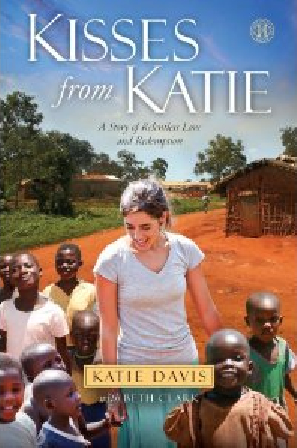
So I have recently begun to read my first non-fiction type book to blog about. It's called Kisses from Katie and is written by Katie Davis about her own life. Here is a short synopsis from goodreads:
 
Katie Davis left over Christmas break her senior year for a short mission trip to Uganda and her life was turned completely inside out. She found herself so moved, so broken by the people and the children of Uganda that she knew her calling was to return and care for them. Her story is like Mother Teresa’s in that she has given up everything—at such a young age—to care for the less fortunate of this world. Katie, a charismatic and articulate young woman, has gone on to adopt 14 children during her time in Uganda, and she completely trusts God for daily provision for her and her family, which includes children with special needs.

 
Katie's New Family:


This book is heartbreaking. That's all I'm really going to say about it so far. When and if you ever pick it up do not expect to be able to sit down and read through it quickly. Especially at the beginning. Reading about this life she lives in Uganda, about her daily struggles, makes my life seem so so so easy. Almost pointless. But as much as I'm saddened by the condition of living in Uganda, hearing her own personal struggle with this new life she chose is even harder. She says at one part in the book,
"No matter how many contradictions I struggled with, how difficult certain situations were , no matter how lonely I got, no matter how many tears I cried, one truth remained firmly grounded in my heart... I wanted to be right here in Uganda."
A couple nights ago I was in the car with my mom and my 11 year old sister explaining the story to my sister (my mom has already read the book). I told her how Katie had her whole life planned out ahead of her. Graduate, go to college, get a job, get married, and start a family; until she turned it all around her senior year and moved to Uganda. My sister looked at me straight in the face and told me "That sounds like you, planning your whole life out. Maybe you'll move to Uganda." I laughed. As I read Katie's story I'm realizing I cannot do what she has done and is still doing. And for more reasons than just my paranormal fear of sleeping with cockroaches. I know her story won't push me to move to Africa, but it is showing me what matters in the life I am living. And it's reminding me of what I can do in my own city, in my own home, to make an impact.

Here is a link to Katie's blog : http://katiedavis.amazima.org/